


Why do we play with 2 or 3 boules in petanque?
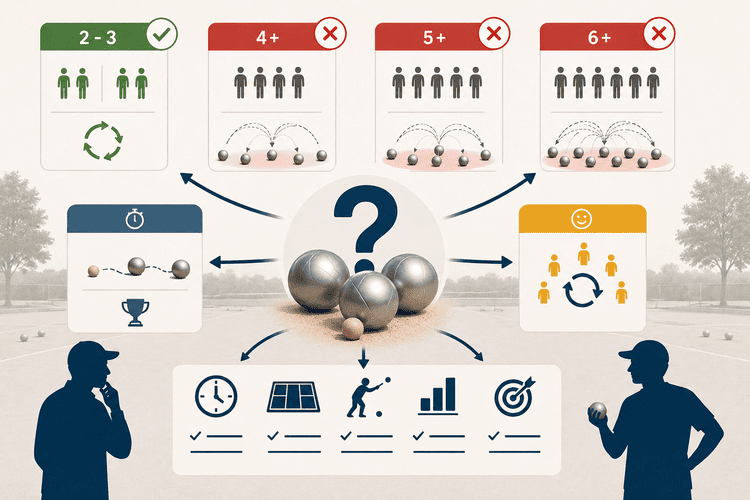
Why do we play with 2 or 3 boules in petanque?
Introduction
When playing pétanque, it feels completely natural:
each player has a specific number of boules.
In singles and doubles, each player uses 3 boules.
In triples, each player uses 2 boules.
Today, this rule seems completely obvious.
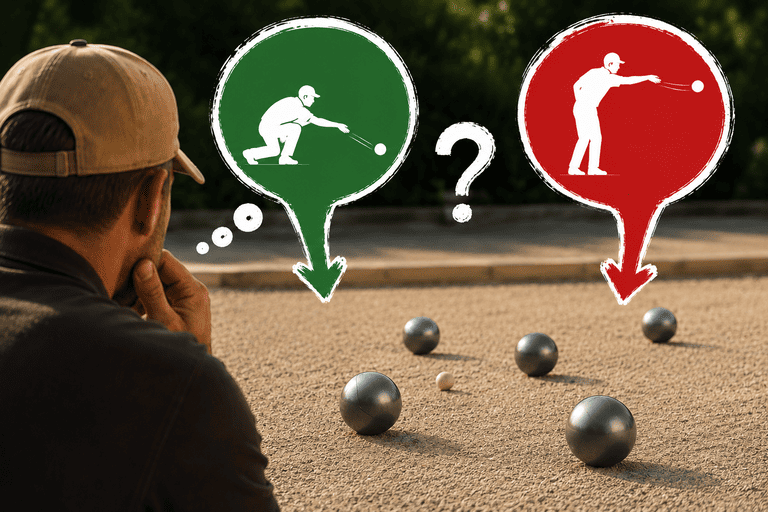
Yet very few players actually stop and ask themselves:
Why this exact number?
Why not play with 4 or 5 boules per player?
And by the way, has pétanque always been played with this number of boules?
In reality, this rule has evolved significantly throughout the history of pétanque.
Let’s take a closer look at why the current number of boules was definitely not chosen by accident.
The Number of Boules Has Evolved Throughout History
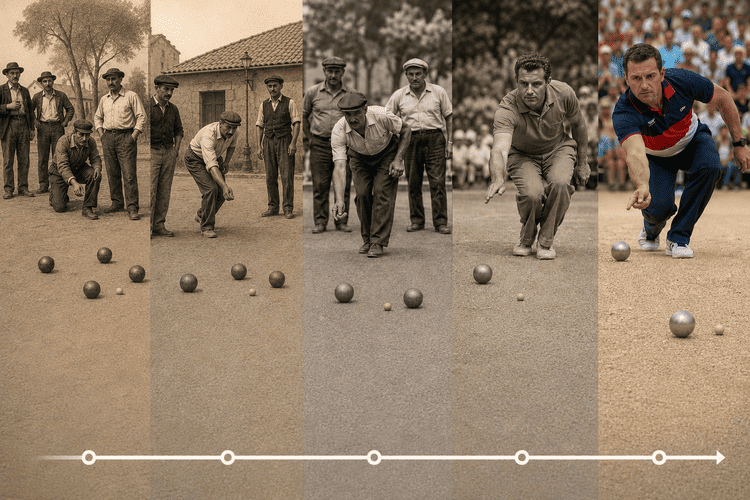
Contrary to what many people think, pétanque has not always used today’s rules.
Over the decades, several different formats have existed.
In the 1930s, some competitions allowed:
- 3 boules in singles
- 2 boules in doubles
- 2 boules in triples
- Sometimes even different formats depending on the organizers
For a long time, the rules were not yet completely standardized.
The number of boules gradually evolved alongside the official structuring of the sport.
The Progressive Standardization of Rules
Starting in the 1950s and 1960s, federations gradually began to standardize official rules.
During this period, several formats still coexisted.
Among them:
- Singles played with 3 or sometimes 4 boules
- Local competitions with different variations
- Adaptations depending on countries and federations
It was only in 1972 that the 3-boule singles format officially became the international standard.
Pétanque then entered a long-lasting phase of standardization.
Why 3 Boules in Singles?
Three boules provide an excellent strategic balance.
With only one or two boules:
- The game would become too fast
- Tactical possibilities would be limited
- One mistake would immediately become very costly
With three boules, a player can:
- Point several times
- Shoot several times
- Correct a mistake
- Adapt strategy during the end
This number creates an excellent balance between technique and strategy.
Why Only 2 Boules in Triples?
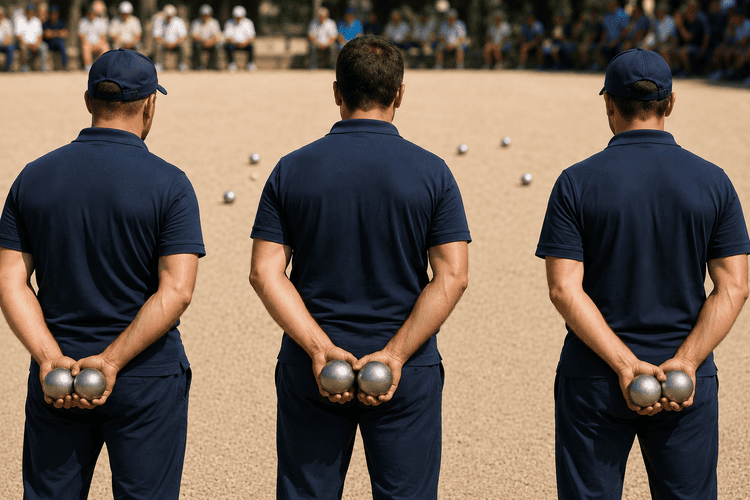
Triples work differently.
Each team has:
- 3 players
- 2 boules per player
Which means:
6 boules per team.
If every player kept 3 boules in triples, this would mean:
9 boules per team.
This would significantly increase the length of matches.
The pace would become much slower, especially during competitions.
The chosen solution was therefore to limit each player to 2 boules.
The Total Number of Boules Strongly Affects Match Duration
The total number of boules in play varies depending on the format.
- Singles → 6 boules total
- Doubles → 12 boules total
- Triples → 12 boules total
We immediately notice an important difference.
Singles naturally play faster.
In doubles and triples, the higher number of boules allows more strategic possibilities but also increases the duration of each end.
The rules therefore aim to maintain a good balance between tactical depth and game rhythm.
Why Don’t Players Use 4 or 5 Boules?
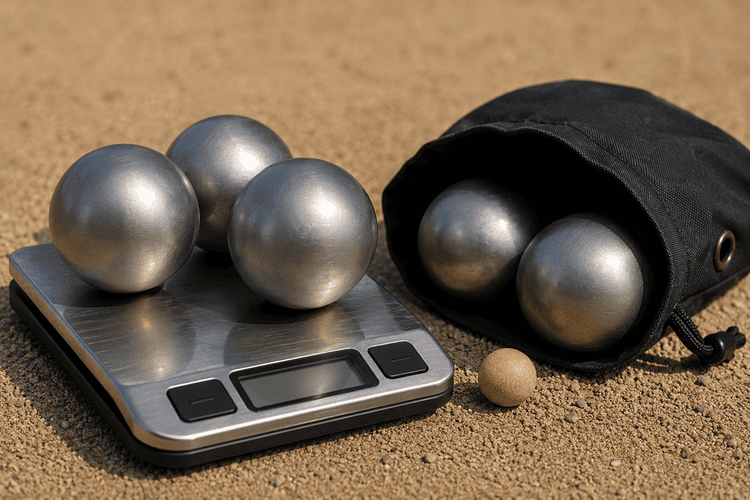
One could imagine playing with more boules.
For example:
- 4 boules per player
- 5 boules per player
But one very practical problem immediately appears:
weight.
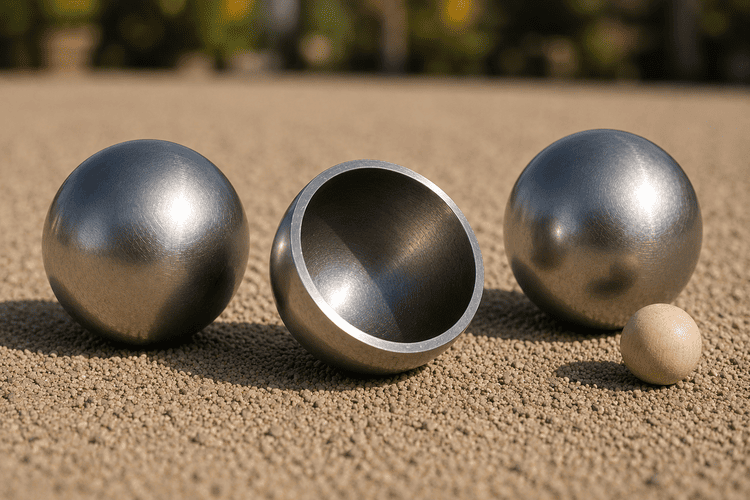
A pétanque boule usually weighs between 650 and 800 grams.
With 3 boules, a player already carries:
- Around 2 to 2.4 kilograms
With 5 boules, this would represent:
- More than 4 kilograms carried by hand or in a bag
During competitions, players often play multiple matches throughout an entire day.
Carrying too many boules would quickly become tiring and impractical.
The Number of Boules Directly Influences Strategy
The number of available boules greatly changes the way the game is played.
The more boules a player has:
- The more mistakes can be corrected
- The more risks can be taken
- The more momentum swings can happen
On the other hand, with fewer boules:
- Every throw becomes crucial
- Precision becomes essential
- Pressure increases significantly
The number of boules therefore directly contributes to the overall balance of the game.
Could This Rule Change One Day?
Even though the current format seems firmly established, some unofficial competitions have occasionally experimented with other formats.
We have occasionally seen:
- Singles played with 4 boules
- Special exhibition event formats
- Temporary local variations
But today, the 3-boule rule is still widely considered the best possible compromise.
Conclusion
If pétanque today uses 3 boules in singles and doubles, and 2 boules in triples, this is absolutely not by accident.
This rule is the result of decades of evolution aimed at finding the best possible balance.
It needed to combine:
- Strategy
- Match pace
- Physical fatigue
- The weight carried by players
- Competitive balance
The next time you carry your set of boules, you’ll know that this exact number is the result of many years of evolution in the sport.



Are you organizing a tournament?
With Petanque Manager, run your pétanque tournaments effortlessly with automatic match draws, live results and real-time rankings.
Create an organizer profile