


How to stay mentally strong in decisive pétanque ends?

How to stay mentally strong in decisive pétanque ends?
Introduction
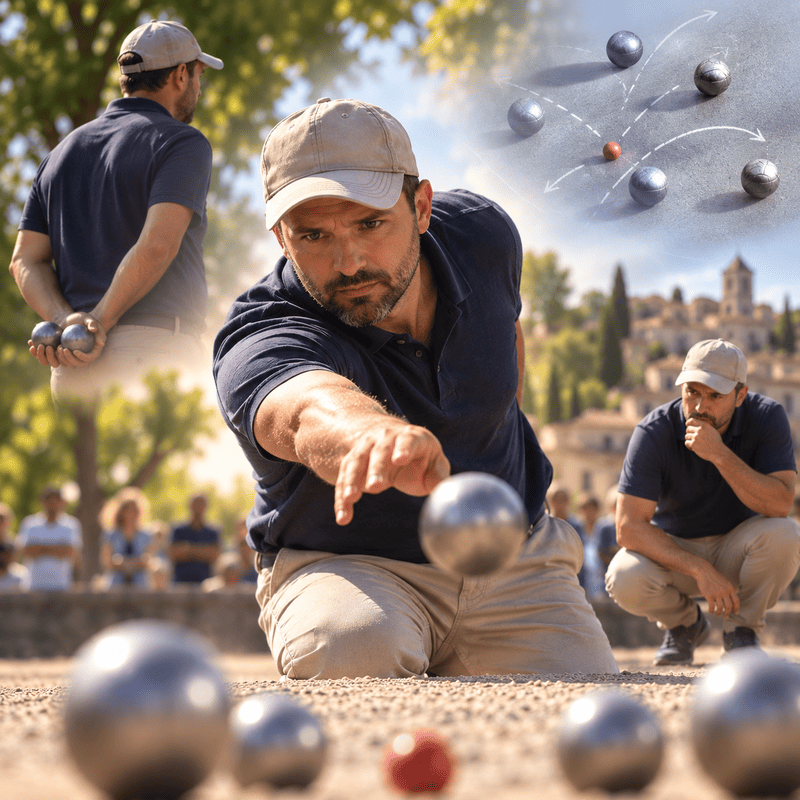
In pétanque, technique and tactics are obviously essential.
However, when the score gets close and a match comes down to one or two balls, mental strength is often what makes the difference.
How many players perform perfectly, leading 12–8, only to lose their composure when it is time to finish the game?
How many shooters miss a boule they would normally hit nine times out of ten simply because the stakes are higher?
Decisive ends put players' nerves to the test, regardless of their level.
Fortunately, mental strength can be trained just like technique.
Here are several tips to help you manage pressure more effectively and increase your chances of winning important matches.
Why Are Decisive Ends So Difficult?
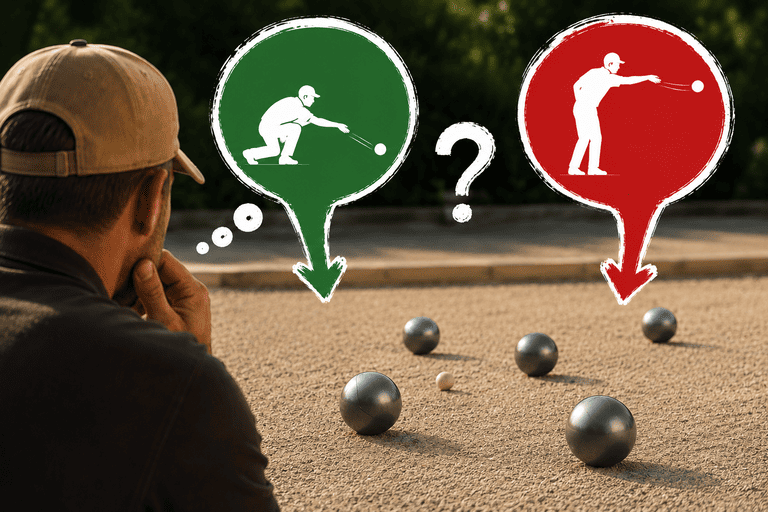
When a team is close to victory or facing elimination, the brain reacts differently.
Stress increases.
Heart rate rises.
Negative thoughts begin to appear:
- I absolutely must not miss.
- If I miss this boule, we lose.
- We have to win this match.
- Everyone is watching me.
The problem is that these thoughts shift attention away from the task at hand.
Instead of focusing on the shot, the player focuses on the consequences.
This is often when mistakes happen.
Focus on the Boule, Not the Score
One of the most common mistakes is thinking about the outcome before even playing your boule.
At 12–12, or when your opponents have several points on the ground, the score naturally occupies your mind.
However, the score has already been established.
You cannot change it directly.
The only thing you can control is the boule you are about to play.
Try to focus your attention on:
- The target.
- The terrain.
- The trajectory.
- Your execution.
The more your concentration is directed toward the present action, the less room stress will have.
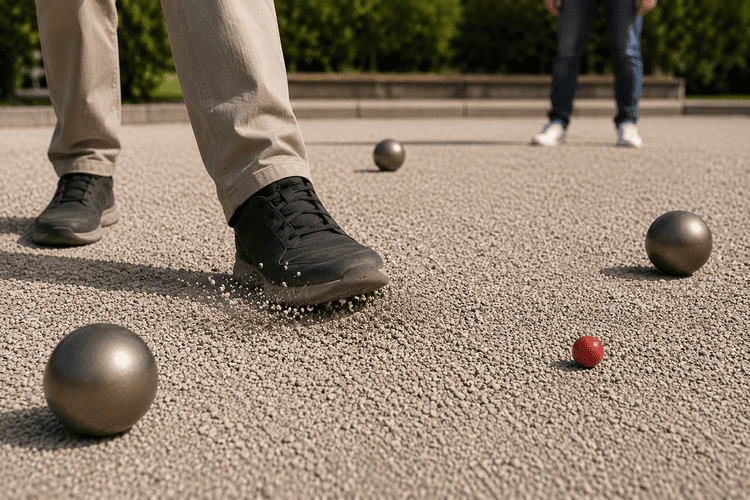
Keep the Same Routine
The best players almost always follow the same habits before playing.
This routine provides stability, even in high-pressure situations.
For example:
- Analyze the situation.
- Choose your objective.
- Take a breath.
- Get into position.
- Play your boule.
Repeating the same preparation helps your brain stay in a familiar environment.
The decisive end then becomes just another end.
Accept Pressure Instead of Fighting It
Many players try not to feel stress.
That is a mistake.
Pressure is normal.
Even the best players in the world feel stress during important moments.
The goal is not to eliminate that emotion.
The goal is to learn how to perform despite it.
When you feel pressure building:
- Accept it.
- Acknowledge it.
- Continue playing anyway.
The more you fight stress, the more powerful it often becomes.
Breathe to Regain Your Calm
Breathing is one of the simplest and most effective tools for managing pressure.
Before an important boule:
- Take a deep breath in.
- Hold it for a moment.
- Exhale slowly.
This simple action helps reduce muscle tension and slow your heart rate.
Sometimes just a few seconds are enough to regain clarity.
Avoid Thinking About the Worst-Case Scenario
During decisive ends, many players immediately imagine the consequences of failure.
They think:
- If I miss, we are eliminated.
- If I fail, my teammates will be disappointed.
- Everyone will remember this mistake.
These thoughts increase pressure without improving performance.
Instead, focus on a positive intention:
- I will execute my shot.
- I will play my best boule.
- I will apply what I know how to do.
The brain generally responds better to a concrete objective than to fear.
Trust Your Training
Decisive ends are not the time to change your technique.
When pressure rises, some players start altering the way they shoot or point.
They begin thinking about technical details they normally never worry about.
As a result, their movements become less natural.
In important moments, trust the work you have done during practice.
Your usual technique remains your best ally.
Deal with Mistakes Immediately
Even during a decisive end, nobody is perfect.
A missed boule does not automatically mean a lost match.
The best competitors know how to move on quickly.
After a mistake:
- Accept it.
- Analyze it briefly if necessary.
- Focus immediately on the next action.
Dwelling on a missed boule often leads to another mistake.
Rely on Your Team
In doubles or triples, pressure should never rest on one person alone.
Teammates play a vital role in emotional management.
A few simple attitudes can make a huge difference:
- Encourage each other after mistakes.
- Maintain a positive attitude.
- Avoid unnecessary criticism.
- Stay focused on the match.
A united team generally handles pressure better than a team where everyone plays individually.
Practice Playing Under Pressure
Mental strength develops mainly through experience.
To improve, it is useful to recreate pressure situations during practice.
For example:
- Start a game at 10–10.
- Play a single decisive end.
- Organize challenges with a symbolic reward.
- Simulate match-winning shots.
The more often you experience these situations, the more familiar they become during competition.
Turn Pressure into Motivation
Pressure is not necessarily an enemy.
It is often a sign that the match matters.
If you feel stress during a decisive end, it is usually because you care about succeeding.
Try to view that emotion as a source of energy rather than an obstacle.
Great competitors do not play without pressure.
They simply learn how to use it to their advantage.
How Can Petanque Manager Help?
Although mental strength is primarily a personal skill, smooth organization also helps reduce player stress.
With Petanque Manager, participants benefit from:
- Clear match schedules.
- Live result tracking.
- Efficient court management.
- Smooth tournament organization.
- Better visibility of competition progress.
Players can therefore focus more on their game and less on organizational issues.
Conclusion
In pétanque, decisive ends are often won as much with the mind as with the hands.
The ability to stay calm, maintain your routine, accept pressure, and focus on the present moment can completely change the outcome of a match.
Mental strength is not a gift reserved for a few players.
It is a skill that can be trained, developed, and improved through experience.
By learning to better manage important moments, you will not only increase your chances of winning more matches, but also enjoy the game more when the stakes are at their highest.
Are you organizing a tournament?
With Petanque Manager, run your pétanque tournaments effortlessly with automatic match draws, live results and real-time rankings.
Create an organizer profile