


The Role of the middle player in pétanque: the most difficult position to master?
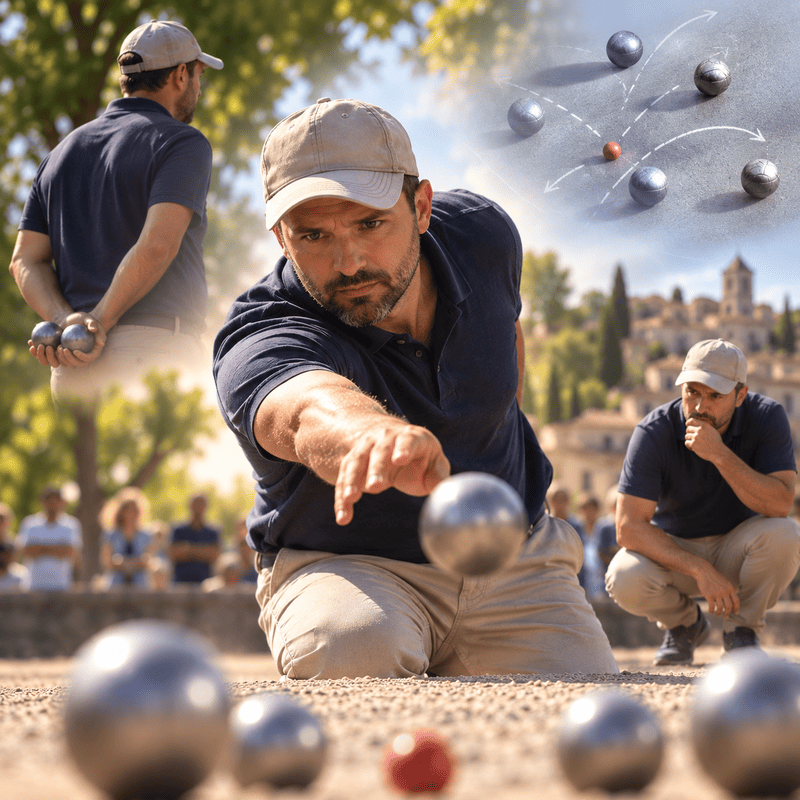
The Role of the middle player in pétanque: the most difficult position to master?
The Middle Player in Pétanque: The Player Who Must Be Able to Do Everything
In triples, the middle player has a unique role. They must be able to point, shoot, regain the point, add points and, above all, take over from their teammates when the situation requires it.
The middle player is often the player who finishes the ends. When the pointer has played their two boules and the shooter has also played their two boules, the middle player may be left with the team's final boules. They must then be able to play the final shots of the end, sometimes in a situation where every boule can have a considerable impact on the score.
But their role is not limited to the end of the end. If the pointer has no boules left while the team still needs to point, the middle player takes over and points. And if the shooter has no boules left while a shot is necessary, the middle player also takes over and shoots.
This versatility makes the middle player essential in a triple. They must constantly adapt to the situation and do whatever the end requires, whether that means regaining the point, maintaining a favorable position or trying to score several points for their team.
The Middle Player: A Player Who Can Finish the Ends
In a triple, each player normally has two boules. When the pointer and the shooter have already played their four boules, the two boules of the middle player may still remain.
The middle player can then become the last player to play during the end.
This situation gives them a particular responsibility. They must observe everything that has happened before their turn, count the remaining boules, assess the position of the jack and the boules, and determine how to make the best possible use of their final boules.
Sometimes they may simply secure the point with a well-placed boule. In other situations, they may try to regain the point, add another boule or attempt a shot that could completely change the configuration of the end.
The middle player's final boules can therefore be extremely important, as they can determine the final score of the end.
When the Pointer Has No Boules Left, the Middle Player Takes Over
Imagine that the team's pointer has already played their two boules, but the end is not over and the team still needs to point.
The shooter may still have one or two boules in hand, but that does not necessarily mean they should play in the pointer's place.
If the situation requires a point, it is the middle player's turn to take over.
This ability is essential, because the middle player must be comfortable enough at pointing to step in even when this was not necessarily planned at the start.
They may have to regain the point with a precise boule, but they may also need to add another boule when their team already has the advantage.
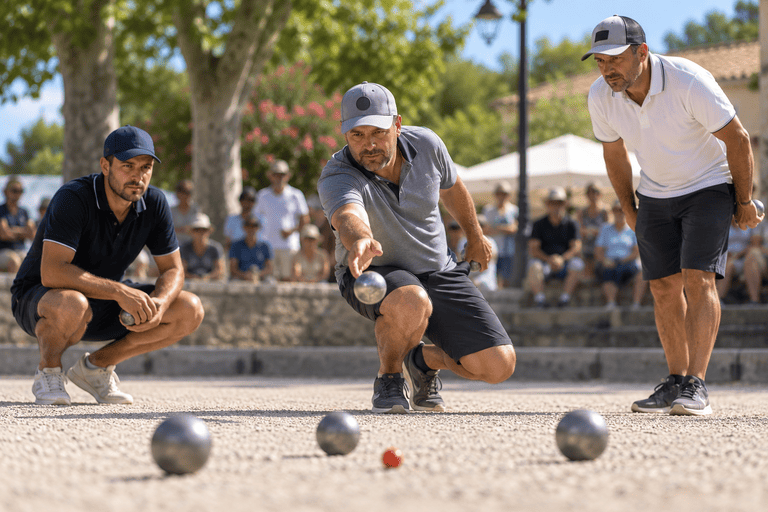
Pointing to Regain the Point… but Also to Score More
The middle player's point does not always aim simply to save an end.
When their team is behind in points, they can of course try to regain the point.
But when their team already has several points, their role can be even more important: increasing the score.
If their team already has two boules in front of the jack and the opponents have no boules left, the middle player can try to place a third boule and turn a two-point end into a three-point end.
With a second boule, they may even have the opportunity to score additional points.
The middle player must therefore know the difference between a situation where they need to secure the result and one where it is possible to take a reasonable risk to increase the number of points scored.
When the Shooter Has No Boules Left, the Middle Player Becomes the Shooter
The same logic applies to shooting.
When the shooter has played their two boules but a shot is still necessary, the middle player must be able to take their place.
The pointer may still have a boule in hand, but if a shot is required, that does not mean they should become the shooter. This is precisely where the middle player's versatility becomes so important.
The middle player must be able to make this shot to regain the point, by removing the opposing boule that currently controls the end.
But they can also shoot with the aim of significantly changing the situation and allowing their team to score several points.
A Shot That Can Change the Score of the End
The middle player's shot can have very important consequences.
When an opposing boule completely blocks the end, a successful shot can allow the team to regain the point.
And if several opposing boules are grouped closely together, a shot can also open up the game and completely change the situation.
The middle player can then turn a situation where their team is at risk of losing the end into one where they can ultimately score several points.
This is why the middle player must always think about the consequences of their shot, not just whether the shot itself will succeed.
The Middle Player Must Know Which Technique to Use at the Right Time
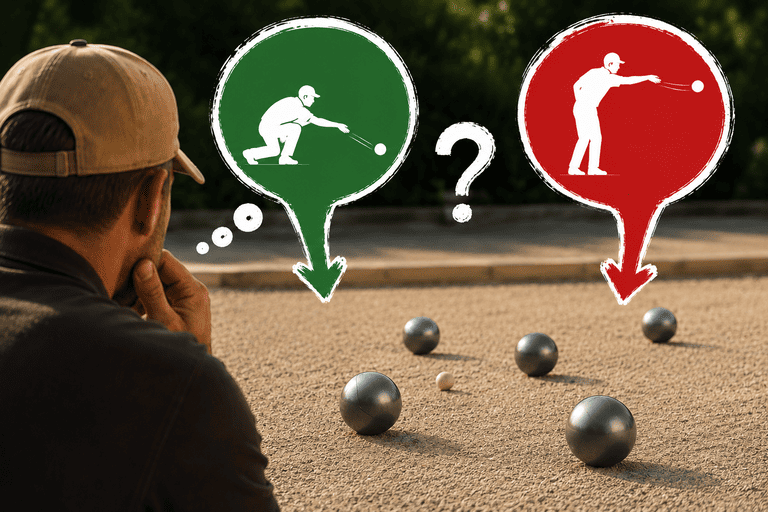
This is where the great difficulty of the position lies: the middle player must master the two main techniques of pétanque, but above all know which one to use.
They may have to point when they would have preferred to shoot. They may have to shoot when the situation initially seemed favorable for pointing.
Before every boule, they must therefore analyze the situation:
- Who has the point?
- How many boules does each team have left?
- Is it possible to regain the point by pointing?
- Is a shot necessary?
- Is it possible to add several points?
- What is the risk if the attempt fails?
- What will happen to the end after this boule?
The middle player must therefore be both a technician and a strategist.
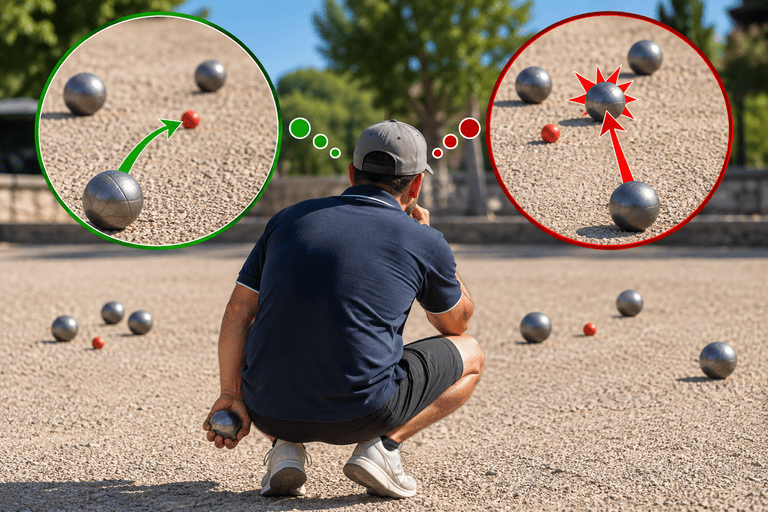
A Crucial Role at the End of the Mène
The final stages of an end are often when the middle player's role becomes most visible.
When the other players have used all their boules, they may find themselves with the final boules of the triple.
They may have to play a precise boule to secure a point, attempt a difficult shot to save the end, or on the contrary try to place an additional boule to increase the score.
In these moments, every boule counts, and the middle player's ability to remain calm can make a huge difference.
The Middle Player Is Often an Experienced Player
This responsibility explains why the middle position is often given to an experienced player.
Experience makes it easier to read situations, assess risks and, above all, make decisions quickly.
The middle player must also know their teammates and understand how they react in important moments.
They need to know when to encourage their pointer, when to trust their shooter and when to suggest another tactical solution.
This experience is therefore not limited to technique. It also involves understanding the game and managing the team.
The Middle Player: A True Advisor
In many triples, the middle player also has an advisory role.
Thanks to their versatility and experience, they can have a global view of the end and help their teammates make the right decisions.
Should they point? Should they shoot? Should they take a risk to try to score several points? Or should they play it safe and secure the end?
The middle player can provide their analysis and contribute to the collective decision-making process.
In tense situations, this ability to maintain a clear view of the game can be particularly valuable.
The Middle Player Can Also Act as a Mediator
A triple brings together three players with three different personalities. It can therefore happen that the pointer and the shooter have different opinions about how an end should be played.
The middle player can then take on the role of a mediator.
Their experience and position within the team can allow them to step back, listen to everyone's arguments and bring the discussion back to the main objective: finding the best solution for the team.
A good middle player should not necessarily try to impose their choice. Above all, they must be able to share information, maintain trust and preserve the cohesion of the triple.
Henri Lacroix: A Model of Versatility
Among the great French players who perfectly illustrate the demands of the middle position, Henri Lacroix is an exceptional example.
Known for his very high level of skill both at pointing and shooting, he perfectly represents this ability to adapt to the needs of an end.
A player at this level can point when the situation requires it, shoot when a shot becomes necessary and, above all, make the right decision at the right time.
His career at the highest level perfectly illustrates the importance of versatility, experience and reading the game when playing as a middle player.
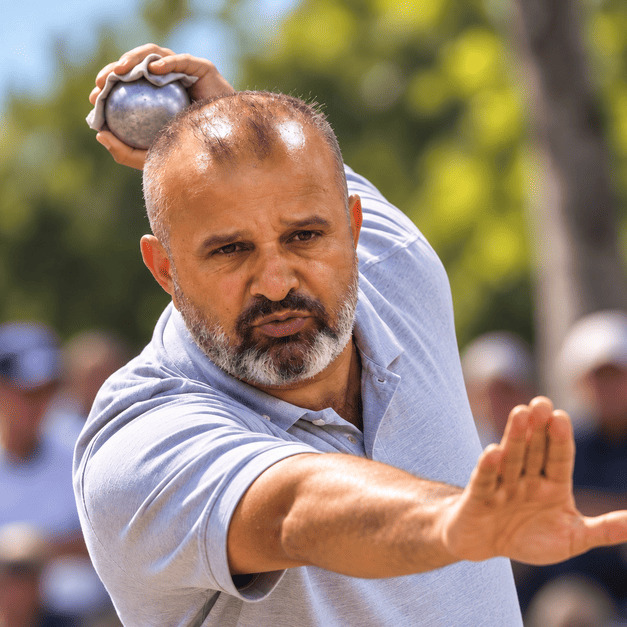
Why Is the Middle Position So Difficult to Master?
The pointer generally has one dominant specialty: placing their boules. The shooter generally has one dominant specialty: eliminating opposing boules.
The middle player must be able to master both.
But above all, they must know when to point, when to shoot, when to regain the point, when to add points, when to play it safe and when to take a risk.
They can take over from the pointer when more pointing is required. They can take over from the shooter when a shot is necessary. And they can also find themselves with the final boules of the triple when their two teammates have finished playing.
All these technical responsibilities are combined with reading the game, anticipation, decision-making, advising teammates and sometimes mediating between them.
The middle player must therefore be able to do whatever the end requires, at the moment when the team needs it.
Conclusion
The middle position is the most complete role in pétanque.
They do not simply play between the pointer and the shooter. They can take over from the pointer when the pointer has no boules left, take over from the shooter when the shooter has finished shooting, and become the last player to act when the other members of the triple have used all their boules.
They can point to regain the point, but also to add points. They can shoot simply to regain the advantage, but also to completely change the end and allow their team to score several points.
And when they have the necessary experience, they often become much more than a versatile player: they can be the advisor, the strategist and sometimes even the mediator of the triple.
It is this ability to adapt to every situation that makes the middle position so demanding. They must know how to do everything, but above all know what to do, when to do it and why to do it.
Are you organizing a tournament?
With Petanque Manager, run your pétanque tournaments effortlessly with automatic match draws, live results and real-time rankings.
Create an organizer profile