


Organizing a petanque tournament: what are the costs and revenue sources for your club?
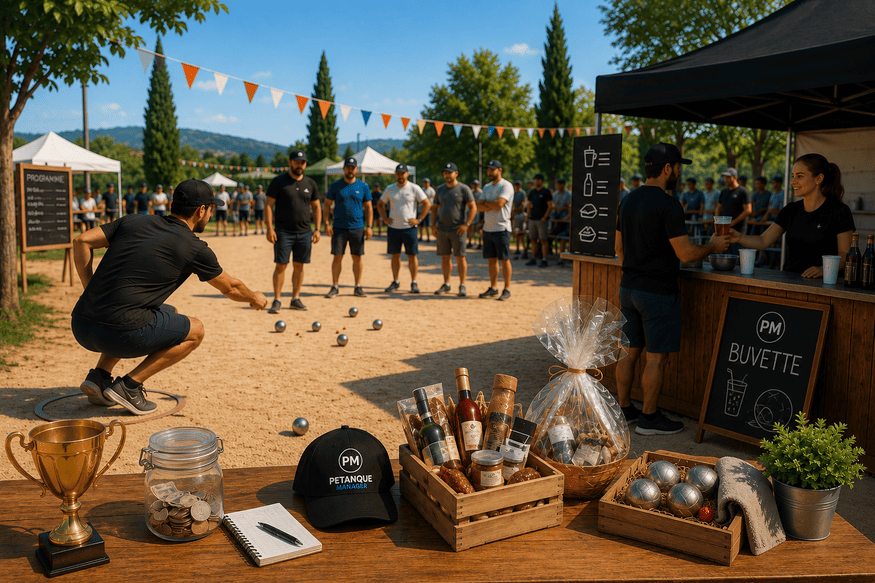
Organizing a petanque tournament: what are the costs and revenue sources for your club?
Organizing a Pétanque Tournament: What Are the Costs and Revenue Sources for Your Club?
Introduction
Pétanque tournaments play an important role in the life of clubs and associations.
They bring players together around a friendly event, help create activity within the local community, and keep the club active throughout the year.
Contrary to popular belief, registration fees are not always a source of income for the organizing club. In most tournaments, entry fees are fully redistributed to participants as cash prizes. Some organizers even add extra prize money to attract more players.
So, how much does it really cost to organize a pétanque tournament? What expenses should be expected? Where does the club's revenue actually come from?
This guide will help you better understand the costs and revenue associated with organizing a pétanque tournament.
Why Organize a Pétanque Tournament?
Beyond the sporting aspect, a pétanque tournament can:
- Bring life to the club and the local community
- Attract new players
- Retain club members
- Create a friendly atmosphere
- Promote local partners and sponsors
- Help finance club activities
A well-organized tournament can therefore contribute to the development of the association throughout the year.
The Main Expenses to Consider
Cash Prizes
In many pétanque tournaments, prizes consist of a redistribution of entry fees.
For example:
32 teams registered at €10 per team:
32 × €10 = €320
The prizes distributed will often be:
€320 (entry fees redistributed)
Some associations choose to add extra prize money to attract more participants:
Prize fund = entry fees + €200
In our example:
€320 + €200 = €520 in prizes
This approach is particularly attractive because it increases the competitive appeal of the tournament and attracts more players.
Sponsored Prizes and Gifts
Many tournaments replace part or all of the cash prizes with sponsored gifts.
Common examples include:
- Gift vouchers offered by local businesses
- Restaurant meals
- Theme park tickets
- Sports activities
- Gift baskets
- Pétanque equipment
Local partners are often willing to provide prizes for community tournaments.
For the club, this can be a great way to offer attractive rewards without significantly increasing the budget.
Refreshments and Food Sales
Although they generate revenue, they also require an initial investment:
- Drinks
- Sandwiches
- French fries
- Barbecue food
- Cups
- Napkins
- Condiments
Good planning helps reduce waste and optimize stock management.
Communication and Promotion
To attract enough participants, it is often necessary to invest in:
- Posters
- Flyers
- Banners
- Social media promotion
These costs usually remain limited.
Miscellaneous Expenses
Depending on the size of the event, additional costs may include:
- Sound system
- Insurance
- Electricity
- Equipment rental
- Portable toilets
These expenses should also be considered when preparing the budget.
The Club's Real Sources of Revenue
Registration Fees: Not Always a Revenue Source
Unlike many sporting events, registration fees do not necessarily generate profit for the club.
Example:
32 teams
€10 per team
Registration income:
€320
If all entry fees are redistributed:
€320 in prizes
The result is financially neutral for the association.
In some tournaments, the prize fund may even exceed the amount collected through registrations thanks to sponsors or club contributions.
Refreshments: Often the Main Revenue Source
Most clubs generate the majority of their revenue through the refreshment stand.
Let's take the example of a doubles tournament with 32 teams.
This represents:
- 64 players
- Family members and friends
- Spectators
It is common to have between 80 and 120 people present throughout the day.
With an average spend of €5 per person:
100 people × €5 = €500 in revenue
With a reasonable margin, a large portion of this amount directly supports the club's activities.
Food Sales
Full-day tournaments often offer:
- Sandwiches
- French fries
- Barbecue meals
- Complete meal options
Let's assume:
50 meals sold at €8 each
50 × €8 = €400 in revenue
Food sales often represent a significant complement to refreshment stand revenue.
Local Sponsors and Partners
Local businesses frequently support tournaments through:
- Sponsored prizes
- Gift vouchers
- Financial contributions
- Equipment loans
These partnerships help reduce expenses while strengthening the club's ties with the local community.
Practical Example: A 32-Team Tournament
Assumptions:
32 teams
€10 registration fee
Registrations:
€320
Prizes:
€320 redistributed to players
Registration fees therefore have a neutral impact on the budget.
Other Expenses
| Item | Amount |
|---|---|
| Refreshment stock | €180 |
| Promotion | €20 |
| Miscellaneous | €50 |
| Total | €250 |
Revenue
| Item | Amount |
|---|---|
| Refreshments | €500 |
| Food sales | €350 |
| Sponsorships | €100 |
| Total | €950 |
Funds Available for the Club:
€950 - €250 = €700
This money can be used to:
- Maintain the courts
- Purchase equipment
- Fund competitions
- Organize future events
The Importance of Volunteers
A tournament relies heavily on volunteers.
The larger the tournament, the greater the need for support.
| Number of Teams | Recommended Volunteers |
|---|---|
| 16 teams | 2 to 3 volunteers |
| 32 teams | 4 to 6 volunteers |
| 64 teams | 8 to 12 volunteers |
| 128 teams | 15 volunteers or more |
Volunteers are typically responsible for:
- Preparing the courts
- Welcoming players
- Managing registrations
- Running the refreshment stand
- Handling food service
- Recording results
- Cleaning up after the event
Without volunteers, organizing a tournament would simply not be possible.
How to Increase Revenue Without Raising Registration Fees
Several good practices can improve the club's financial results:
- Develop the refreshment stand
- Offer suitable food options
- Build relationships with local sponsors
- Promote the event effectively
- Encourage participant loyalty
- Organize multiple tournaments each year
The goal is not to charge players more, but to improve the overall experience around the event.
How Can Petanque Manager Help?
Petanque Manager simplifies the organization of all types of pétanque tournaments.
- Manage registrations
- Automatically generate match pairings
- Manage courts
- Follow results live
- Automatically calculate rankings
- Organize X-round tournaments, Swiss system tournaments, à la mêlée tournaments, ABC tournaments, AB tournaments, and single-elimination tournaments
Volunteers save valuable time and can focus on welcoming participants and creating a successful event.
Conclusion
In most pétanque tournaments, registration fees are primarily used to fund the prizes awarded to participants.
The club's real revenue generally comes from refreshments, food sales, and local partnerships.
With good organization, motivated volunteers, and the right tools, a pétanque tournament can become an excellent way to support a club or association while offering a friendly and enjoyable event for players.




Are you organizing a tournament?
With Petanque Manager, run your pétanque tournaments effortlessly with automatic match draws, live results and real-time rankings.
Create an organizer profile